The Domus Aurea in Rome is the surviving part of Emperor Nero’s Golden House, a vast imperial complex built after the great fire of AD 64. Today, visitors can explore preserved rooms beneath the Oppian Hill and encounter a story of ambition, art and the changing city around the Colosseum.
Imagine stepping out of busy modern Rome and into vaulted rooms once created for an emperor. The palace no longer looks like the luxurious residence Nero imagined, but its surviving architecture and painted surfaces make its history compelling.
Why was Nero’s Golden House built?
After the fire of AD 64, Nero began creating an extraordinary imperial residence across a large area of central Rome. Its name, “Golden House,” evokes the lavish decoration associated with the complex. After Nero’s death, later emperors transformed the area; the Colosseum eventually rose on the site of the palace’s artificial lake.
What can you see at the Domus Aurea?
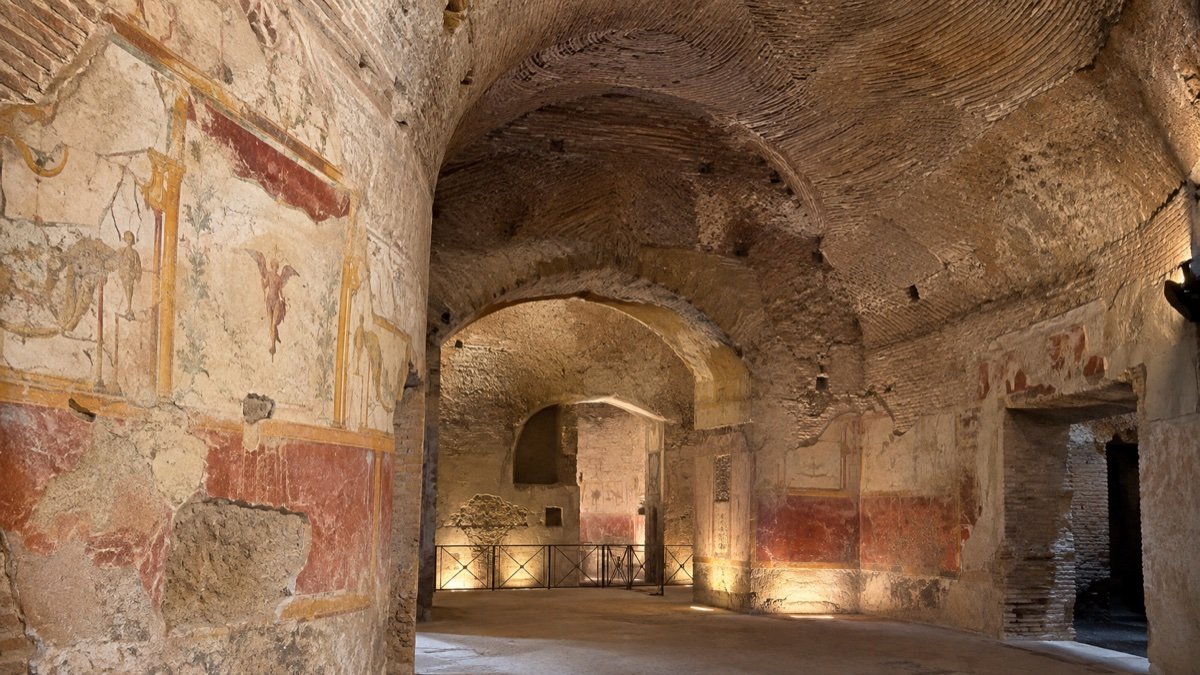
The visit takes you into surviving rooms of the complex, where vaults, traces of decoration and the scale of the architecture suggest what the palace once represented. The site is an active archaeological and conservation area; the route and accessible rooms may change.
Some ticket options include an educational visit with virtual reality. Other options may differ. Check the Colosseum Archaeological Park’s official Domus Aurea page for the current offer, languages, availability and rules before choosing.
How to visit Nero’s Golden House
- Location: The entrance is from Via della Domus Aurea, near the Colosseum and Oppian Hill.
- Tickets: Domus Aurea admission is separate from standard Colosseum entry; check the official ticket description carefully.
- Timing: Opening days and tour slots are limited and can change. Reserve ahead where available and arrive at the time specified on your ticket.
- Comfort: Underground conditions can be cooler and involve uneven surfaces; check the site’s current guidance.
- Accessibility: Contact the archaeological park before booking if you have mobility or sensory requirements.
Is the Domus Aurea worth visiting?
Yes, if you love ancient history and want to look beyond Rome’s most famous exterior views. It is especially rewarding for travelers curious about Nero and how later generations built over earlier Rome. For another vivid layer of the city’s past, explore Basilica di San Clemente nearby.
Plan a private Rome tour around your interests
If you are looking for the best Rome tour for ancient history, start with the places you most want to understand and the time you have. Our tailored private half-day Rome tour lets you discuss a wider route with our team. Ask in advance whether the Domus Aurea fits your date and itinerary; admission and a licensed guide are not automatically included in the listed private tour.
Frequently asked questions
Is the Domus Aurea under the Colosseum?
No. Its surviving visitable rooms are beneath the nearby Oppian Hill; the palace complex once extended across a much larger area.
Do I need a separate ticket?
Yes. Check the official Domus Aurea ticket page for current options rather than assuming a standard Colosseum ticket includes it.
Is it a good first-time Rome attraction?
It is a memorable addition if you can fit its limited opening schedule around the major landmarks and have an interest in ancient history.
Make your Rome trip feel personal. Explore our private tour and ask us to help plan your ancient Rome itinerary.